
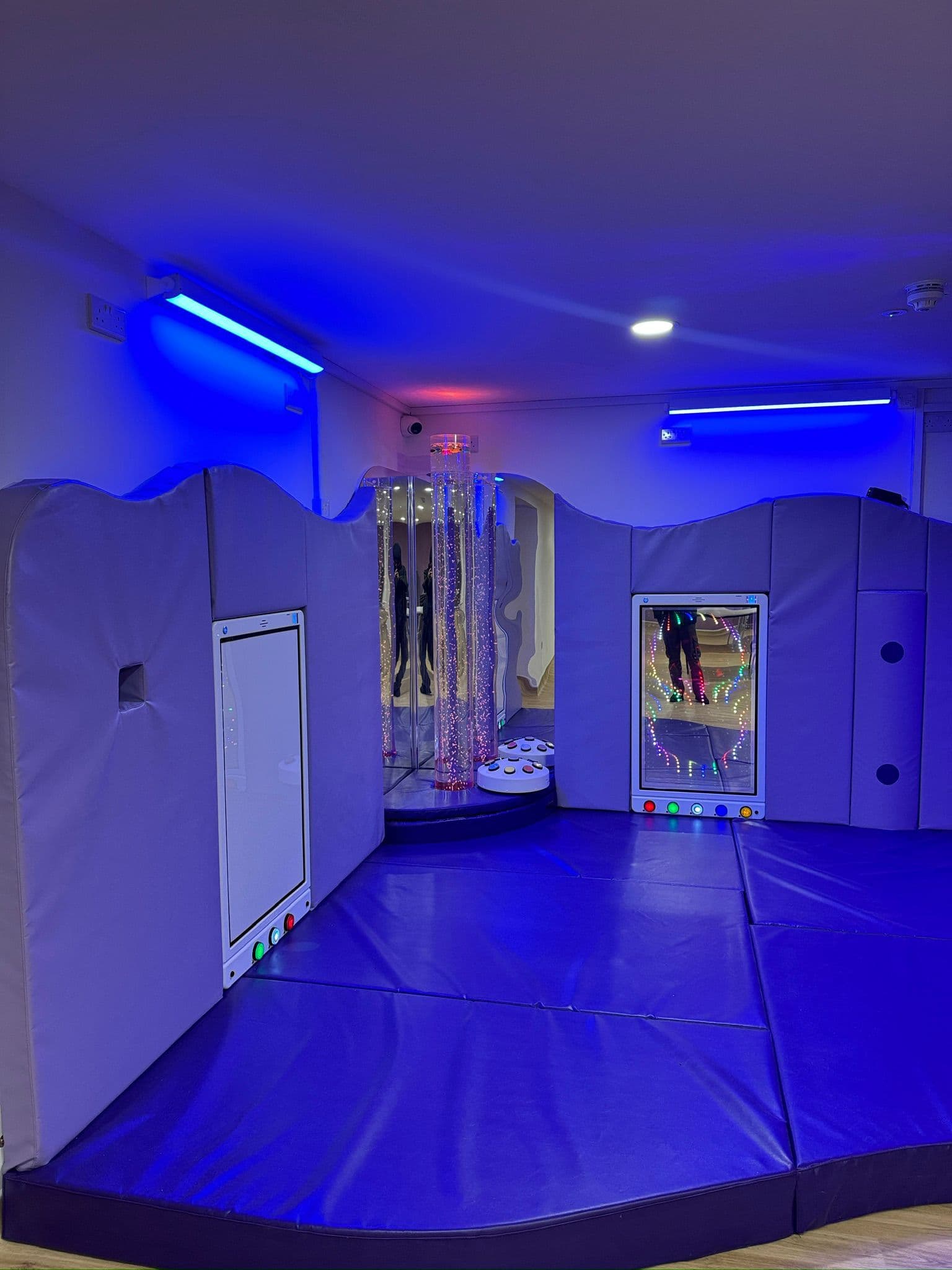
Walk into our sensory room and you'll immediately notice the change in atmosphere. Soft lighting, gentle colours, and a sense of calm replace the busy energy of the activity spaces. This is a room designed with one purpose: to help children feel safe, regulated, and in control.
What's in the Sensory Room?
Our multi-sensory room is equipped with a range of specialist resources, including:
- Bubble tubes — tall columns of gently rising, colour-changing bubbles that provide visual and vibratory feedback.
- Fibre optic curtains — safe to touch, these provide gentle visual stimulation and a tactile experience.
- Soft play surfaces — padded floors, beanbags, and cushions create a safe space for children to lie, sit, or roll.
- Projector and sound system — calming visuals paired with soothing sounds create an immersive relaxation experience.
- Tactile wall panels — different textures for children to explore through touch.
- Weighted blankets and lap pads — providing deep pressure input for calming.
What Is Self-Regulation?
Self-regulation is the ability to manage your emotional and sensory state. It's what allows us to stay calm in a queue, focus during a conversation, or wind down before sleep. For many children with additional needs, self-regulation is something that needs to be learned and practised.
The sensory room provides a safe laboratory for this learning. Children can experiment with what helps them feel calm, alert, or focused — and they can do so in an environment that responds to their needs.
How We Use It Therapeutically
Our occupational therapists and support staff use the sensory room in several ways:
- Regulation breaks — when a child is becoming overwhelmed during an activity, a few minutes in the sensory room can help them reset.
- Structured sensory diets — planned sessions that provide specific types of input a child needs throughout their visit.
- Exploration and assessment — observing how a child responds to different sensory inputs helps us understand their profile.
- Relaxation — end-of-session wind-down time to help children transition back to everyday life.
Creating Sensory Spaces at Home
You don't need professional equipment to create a calming sensory corner at home. A pop-up tent with fairy lights, a beanbag, some favourite textures, and noise-cancelling headphones can provide a valuable retreat for your child.
If you'd like advice on creating sensory-friendly spaces at home, our team is always happy to help with practical suggestions tailored to your child.