
For an autistic child, Christmas often starts weeks before the day itself. School swaps lessons for rehearsals and parties. The classroom is decorated. Then term ends, the routine goes with it, and home looks and sounds different too.
We have written this for parents and carers of autistic children and young people in Nottinghamshire. It follows the order of the holiday, from the last weeks of term to the first day back at school.
The National Autistic Society guide, Christmas tips for autistic people and families, is the source for much of it, and we recommend it to every family.
Autism and Christmas: start with your child
The National Autistic Society gives this advice: "Involve your autistic family member in planning ..."
Ask your child what they are looking forward to and what worries them. With a younger child, or a child who uses few words, offer a choice between two things, use pictures, and think back to what you saw last year.
Your Christmas does not have to look like anyone else's.
The last weeks of term
- Ask school for the dates of plays, parties, trips and non-uniform days. Put them on a calendar at home.
- Ask what can be changed for your child. A quiet place during the party. A smaller part in the play. Permission to miss something.
- Keep home as calm and as normal as you can while school is different.
- Expect tiredness. A child who holds it together all day at school may have nothing left by home time.
A plan for the holiday
- Make a calendar your child can read, with pictures if that helps. Show school days, home days, visits, Christmas Day and the first day back.
- Keep getting up, meals and bedtime close to the usual times.
- Plan one thing a day, and put quiet days between the busy ones.
- Before a trip somewhere new, show your child pictures of it.
Decorations
- Decorate in stages over a week or two. Let your child help to choose the decorations and decide where they go.
- Pick lights with a steady glow, not a flashing setting.
- Leave your child's bedroom, or one corner of the house, exactly as it always is.
Visiting Santa
Seeing Santa is optional. It can mean a long queue, a noisy room and a stranger in a costume asking questions.
Some venues run quieter sessions for children with additional needs. Ask the venue what it offers before you book. Talk your child through what will happen, with pictures if you have them. Agree that a wave from a distance is fine, and that you can leave at any point.
Presents
- A pile of presents can be too much. Spread them over the day, or over several days.
- Some children want to know what is inside. That is fine. Tell them, or leave the present unwrapped.
- Take new toys out of awkward packaging and put the batteries in before you wrap them, so that there is no wait.
- Do not expect a big reaction. Your child may go straight back to an old favourite. That is not ingratitude.
Relatives and Christmas dinner
- Tell relatives in advance that hugs and kisses are your child's choice. A wave is a proper hello.
- Serve the food your child eats, at the time they usually eat it. Let them leave the table when they have finished.
- Keep ear defenders within reach, and skip the crackers if sudden bangs upset your child.
- Agree how long visits will last before they begin.
A quiet place and a plan for difficult moments
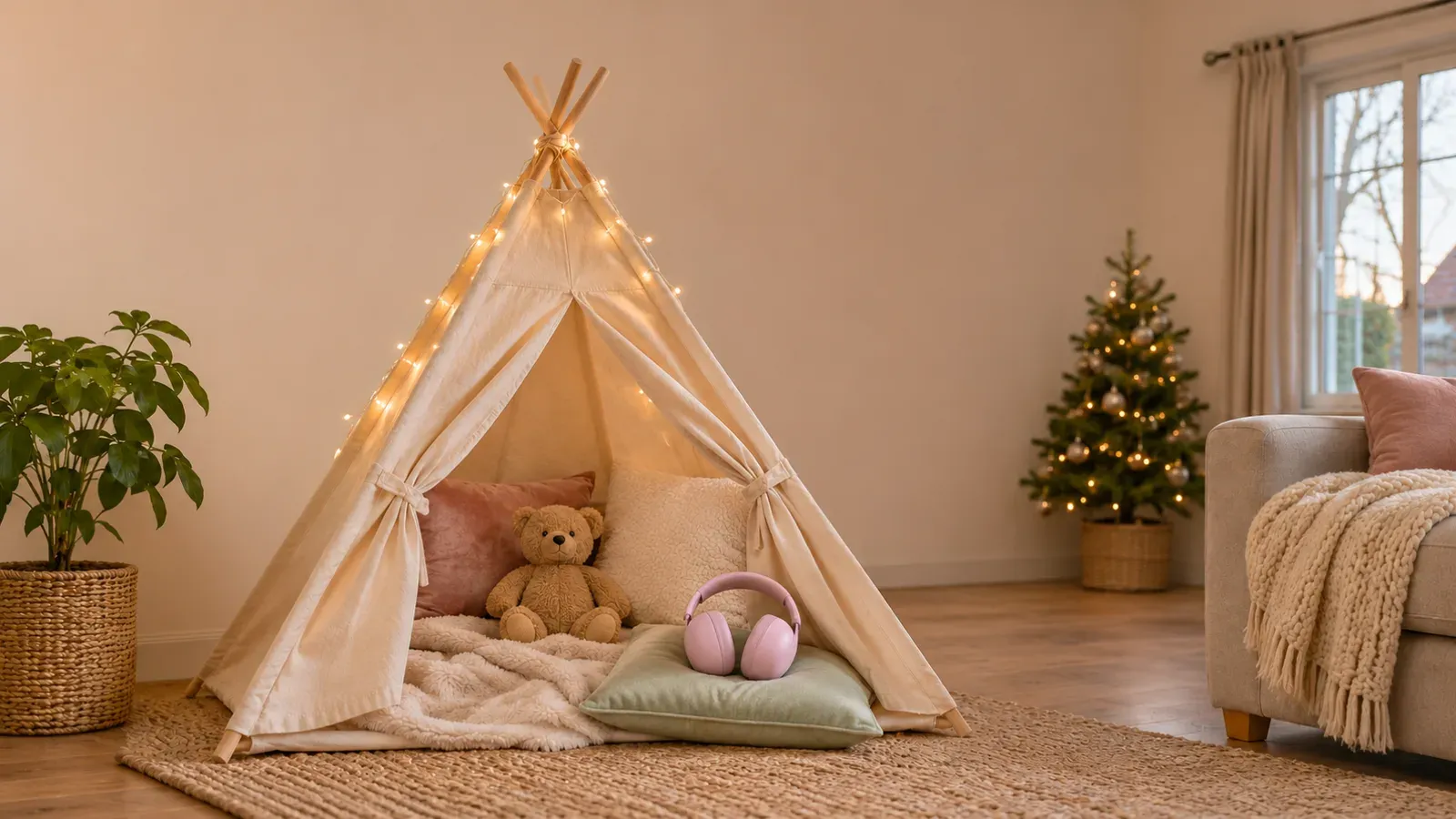
Set up a quiet place with familiar things in it: a den, a tent or a corner of a bedroom. Keep a small kit there, with ear defenders, a favourite toy and something to fidget with.
Decide with the other adults who will step out with your child if it all becomes too much, and where the two of them will go. Our guide to 10 calming strategies for meltdowns has more on this.
Look after yourself
You do not have to deliver a perfect day. A calm Christmas with fish fingers for dinner is a good Christmas.
Back to school
Count down to the first day back on the calendar. Bring bedtime back to normal a few days before. Put the uniform and the school bag out where your child can see them.
About Every Sensation Children Services
Every Sensation Children Services offers specialist sensory support and developmental play for children and young people in Nottinghamshire. We are at Birchwood Grange, Kings Mill Road West, Sutton-in-Ashfield.
Our facilities include a heated hydro pool, sensory rooms and a trampoline room. Sessions are one-to-one or in small groups. To ask about sessions, see our referrals page, call 01623 557560 or contact us.
Related stories:
- Supporting children with autism: everyday strategies that help
- Sensory-friendly half-term activities in Nottinghamshire: a family guide
More guides on autism and Christmas:
- A sensory-friendly Christmas for autistic adults, from Every Sensation in Sutton-in-Ashfield
- Autism and Christmas routine: how to plan the festive weeks, from Hebburn Day Care
- Autism and Christmas presents, visits and gatherings, from Inspired Day Care in Doncaster
Our source is the National Autistic Society page "Christmas tips for autistic people and families", read on 24 November 2026. Every autistic child is different. Please treat this as general information, and speak to the professionals who know your child about anything specific.